

Not every cosmetic concern requires crowns, veneers, or extensive treatment. For many patients in Boulder, composite bonding offers a faster, more conservative path to a noticeably improved smile. Using a tooth-colored resin material applied and sculpted directly to the surface of the tooth, bonding can correct chips, cracks, gaps, discoloration, and irregularities in shape or length, often in a single appointment and without removing healthy tooth structure.
At Alber Dental Studio, composite bonding is performed with the same attention to detail we bring to every cosmetic procedure. Dr. Marc Alber has over 26 years of experience crafting natural-looking results that complement each patient’s individual smile. Our cosmetic dentistry services are designed for patients who want to enhance their appearance without committing to more involved procedures, and bonding is one of the most versatile tools we have to offer.

What Is Composite Bonding?
Composite bonding is a cosmetic dental procedure in which a tooth-colored resin material is applied directly to the surface of the tooth, shaped by hand, and hardened using a curing light. According to the Cleveland Clinic, bonding is one of the most straightforward cosmetic dental procedures available, typically completed in a single visit without anesthesia and without the need to remove healthy enamel. The resin is carefully color-matched to your existing teeth so the result blends naturally and is virtually undetectable.
Composite bonding is most commonly used to repair chipped or cracked teeth, close small gaps between teeth, cover stains or discoloration that do not respond to whitening, reshape teeth that are uneven or irregular, and lengthen teeth that appear too short. It can also be used to protect exposed tooth roots caused by gum recession. Because the resin is applied directly in the office and hardened on the spot, most bonding procedures are completed in 30 to 60 minutes per tooth, making it one of the most time-efficient cosmetic options available.
One of the key advantages of composite bonding is how little preparation the tooth requires. Unlike porcelain veneers, which require a small amount of enamel removal to create a flush surface, bonding is typically applied directly to the existing tooth with minimal or no alteration. This preserves more of your natural tooth structure and makes bonding a fully reversible option. It also means no temporary restorations or waiting periods between appointments in most cases. If you are weighing bonding against veneers or other cosmetic options, our team will walk you through a clear comparison during your consultation. Learn more about porcelain veneers to understand where each treatment is the better fit.
The Composite Bonding Process at Alber Dental Studio
Your bonding appointment begins with a consultation to evaluate the teeth being treated and confirm that bonding is the right solution for your goals. Dr. Alber will select a resin shade that closely matches your natural tooth color, then lightly condition the tooth surface to help the resin adhere properly. The composite material is then applied in layers, carefully shaped and sculpted to achieve the desired contour and appearance. Once the shape is right, a curing light is used to harden the resin in place. Dr. Alber then refines, trims, and polishes the bonded surface until it looks and feels completely natural.
The entire process for a single tooth typically takes between 30 and 60 minutes. Multiple teeth can often be treated in the same appointment, depending on the complexity of the work. No temporary restorations are needed, and you leave the office with your final result the same day. For patients who are also interested in teeth whitening, we recommend completing whitening first so the resin can be matched to your brightened shade.
Bonded teeth are durable and functional, but they do require some care to maximize their lifespan. Composite resin is more susceptible to staining from coffee, tea, red wine, and tobacco than natural enamel or porcelain, so patients who consume these regularly may see color shifts over time. Avoiding biting into hard foods directly with bonded teeth and wearing a night guard if you grind can significantly extend the life of the bonding. With proper care, composite bonding typically lasts between 5 and 10 years before refinishing or replacement is needed. Our team will give you detailed aftercare guidance at your appointment and monitor your bonded teeth at routine checkups. Learn more about our dental technology and how we use it to deliver precise, long-lasting cosmetic results.

What to Expect at Your Bonding Consultation
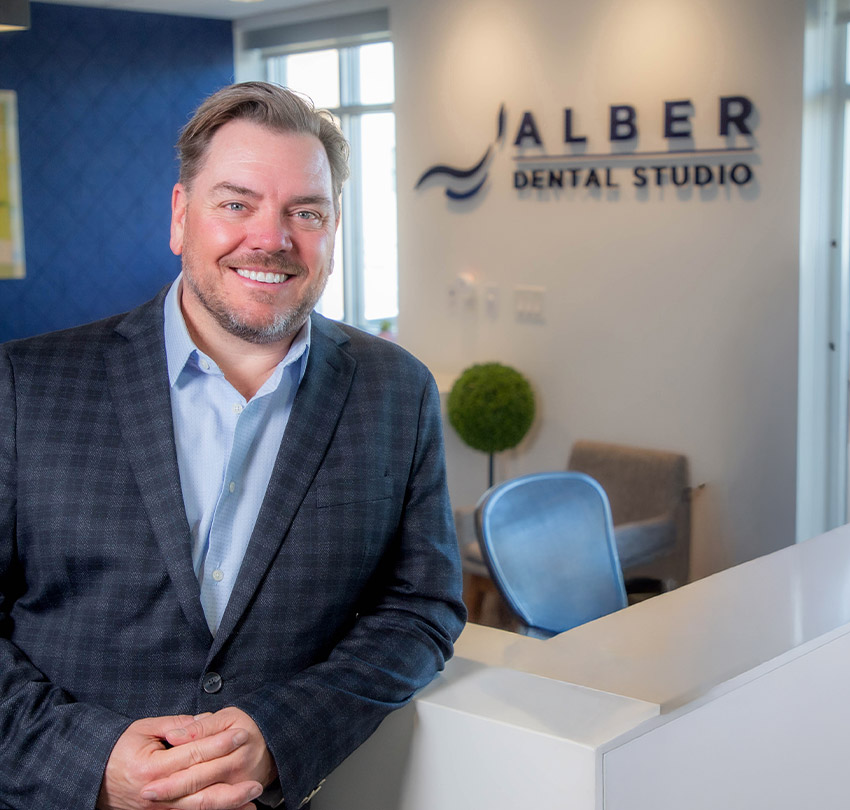
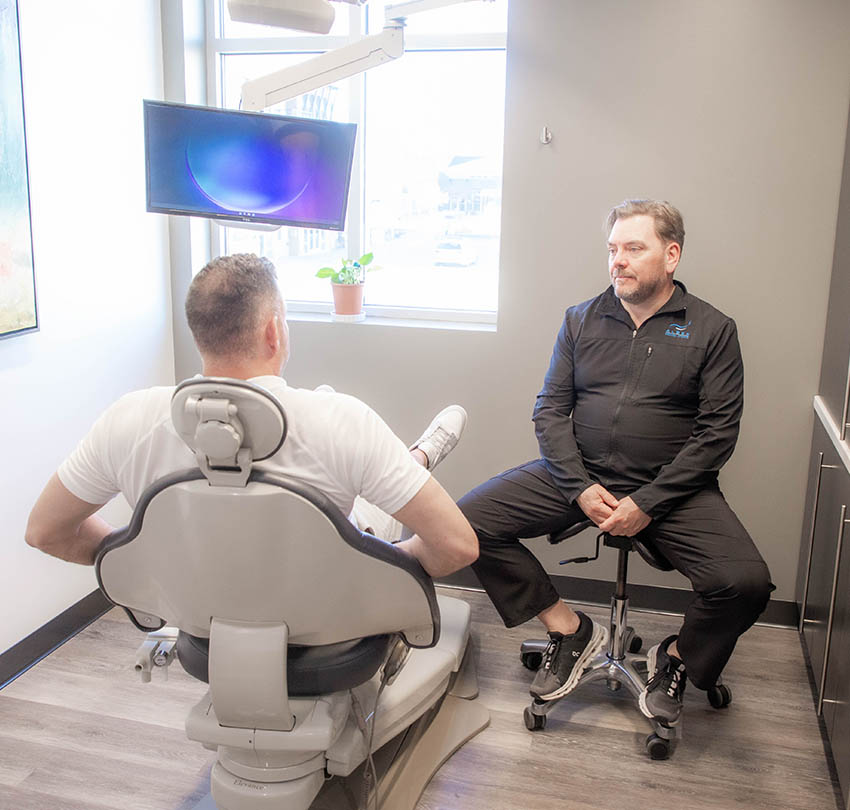
During your consultation, Dr. Alber will examine the teeth you want to improve, review your overall oral health, and discuss your aesthetic goals in detail. We want to understand not just what you want to change, but what result would make you feel most confident. If bonding is the right fit, we will often complete the treatment in that same visit. If your goals are better served by veneers, whitening, or a combination of treatments, we will explain the options clearly and let you make the decision that fits your timeline and budget. There is no pressure and no upselling, just an honest assessment and a plan that is right for you.
- Have healthy teeth and gums with no untreated decay or gum disease
- Want to address stains, chips, gaps, or irregular tooth shape
- Maintain good daily oral hygiene habits
- Do not grind excessively, or are willing to wear a night guard
- Have sufficient enamel to support bonding
- Are looking for a long-term cosmetic investment
Dr. Alber will confirm veneers are the right fit during your consultation — and clearly explain any alternative if they’re not.
The Porcelain Veneer Process
Consultation & Smile Design
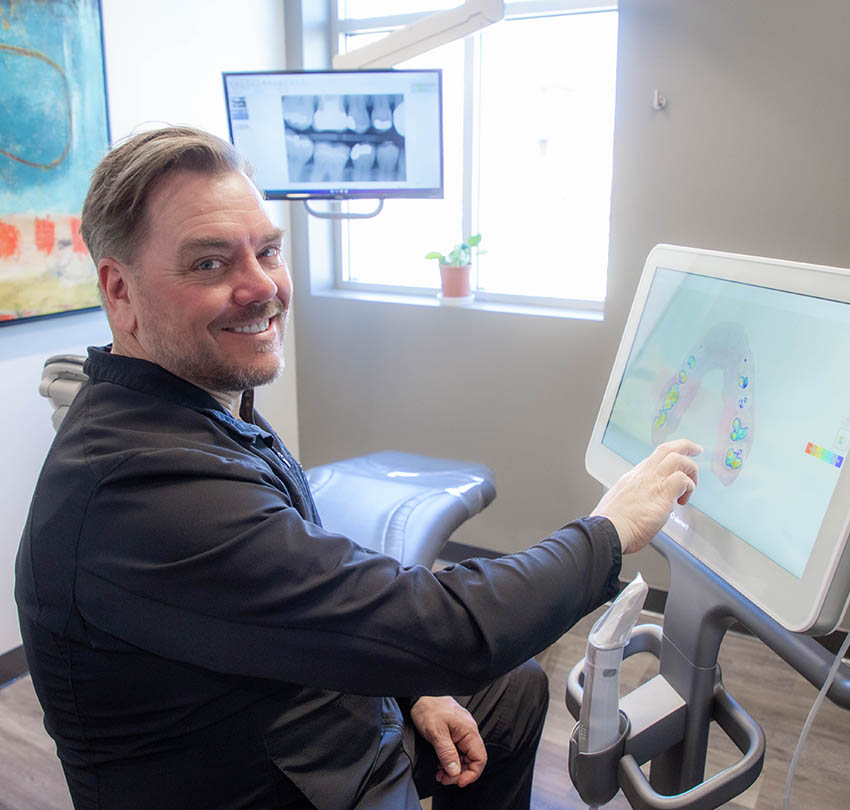
Dr. Alber begins with a thorough exam to confirm you are a good candidate — healthy gums, adequate enamel, and no untreated decay. From there, we discuss your smile goals and review shade options. Digital photos help visualize the proposed changes before any treatment begins. For patients unsure about shade or shape, we can discuss temporary mock-ups to preview the result.
Tooth Preparation & Impressions
At your second appointment, a very thin layer of enamel (typically 0.5mm) is removed from each tooth receiving a veneer. This step is permanent — the tooth structure that is removed is not replaced — so it is important that you are fully committed to the treatment before preparation begins. Impressions are taken and sent to the dental lab, and temporary veneers are placed to protect your teeth while the custom porcelain shells are fabricated. Lab turnaround is typically two to three weeks.
Final Placement & Bonding
When the lab returns your custom veneers, Dr. Alber places each shell on the tooth temporarily to check the fit, color, and bite before permanently bonding them. Minor adjustments can be made at this stage. Once both you and Dr. Alber are satisfied with how the veneers look and feel, they are permanently bonded using a dental-grade adhesive and light-cured into place. The temporaries are removed and your new smile is complete — in the same appointment.
Bonding & Final Polish
Permanent veneers are placed, adjusted for fit and bite, bonded with light-cured adhesive, and polished for a seamless result.
Transform Your Smile in One Visit
Schedule a cosmetic consultation with Dr. Alber and find out whether porcelain veneers are the right path for your smile goals. No pressure — just an honest assessment.
Veneers vs. Composite Bonding
Porcelain Veneers vs. Composite Bonding
Both are cosmetic options — the right choice depends on the extent of the change you want and how long you want results to last.
| Porcelain Veneers | Composite Bonding | |
|---|---|---|
| Material | Custom-fabricated porcelain — lab made | Tooth-colored composite resin — chair-side applied |
| Longevity | 10–20 years with proper care | 5–10 years; may chip or stain sooner |
| Stain resistance | Highly stain-resistant | More susceptible to staining over time |
| Tooth reduction | Minimal — thin enamel layer removed | Often none — additive process |
| Best for | Comprehensive smile transformations, permanent results | Minor corrections, budget-conscious patients, younger patients |
Caring for Your Veneers
How to Make Your Veneers Last
Porcelain veneers are durable and low-maintenance, but a few habits will help you get the most years from them:
Porcelain is strong but not indestructible. Biting down on hard objects puts stress on the bond and can chip the veneer. Treat your veneers the same way you would treat natural teeth — avoid using them as tools.
Bruxism (teeth grinding) is one of the most common causes of early veneer failure. If you grind at night, Dr. Alber will recommend a custom night guard to protect your veneers and underlying teeth from damage.
Veneers are maintained just like natural teeth — brush twice daily and floss regularly. Avoid highly abrasive toothpastes, which can scratch the porcelain surface over time. We recommend a non-abrasive, fluoride toothpaste for daily use.
Routine six-month exams and cleanings let Dr. Alber inspect your veneers for any early signs of wear, edge lifting, or gum changes. Catching small issues early is always easier — and less costly — than addressing them later.
Composite Bonding With Flexible Payment Options
Cosmetic bonding is generally not covered by dental insurance, as it is considered an elective procedure. However, it is one of the more affordable cosmetic options available, and we offer 0% financing through CareCredit, Cherry, and Altheon to help spread the cost. We also accept HSA and FSA funds. Visit our financing page for a full overview of your payment options before your appointment.
Also at Alber Dental Studio
Explore Our Other Cosmetic Services
Veneers are one part of a comprehensive cosmetic dentistry offering at Alber Dental Studio.
A customized combination of cosmetic treatments — veneers, whitening, Invisalign, and bonding — designed around your unique smile goals.
A same-appointment option for minor chips or gaps — no enamel removal needed.
Professional-strength whitening when tooth color is the primary concern.
Read What Our Customers Are Saying
Common Questions
Frequently Asked Questions
Is composite bonding right for me?
Is composite bonding painful?
How long does composite bonding last?
Will composite bonding stain?
How does composite bonding compare to porcelain veneers?
Is composite bonding reversible?
Alber Dental Studio: Composite Bonding in Boulder, CO
Dr. Marc Alber and the team at Alber Dental Studio have helped Boulder patients correct and enhance their smiles for over 26 years. As a fee-for-service practice, every recommendation we make is based entirely on what will deliver the best result for you. Learn more about Dr. Alber’s approach by visiting his provider profile. If a chip, gap, stain, or irregularity has been on your mind, composite bonding may be the straightforward solution you have been looking for. Contact our office to schedule a consultation and find out if bonding is the right fit for your smile goals.