

27+
Years Serving Boulder
735+
Five-Star Google Reviews
3
Financing Options Accepted
100%
Fee-for-Service Practice
Most people who grind or clench their teeth do it at night without ever knowing it. By the time the damage becomes noticeable, years of excessive force have already taken a toll on enamel, restorations, and the joints that control jaw movement. A custom night guard is the most effective way to interrupt that cycle and protect your teeth from further wear before the damage compounds.
At Alber Dental Studio, we provide custom-fitted night guards for patients throughout Boulder and the surrounding communities. Our approach to night guard therapy begins with a thorough evaluation to confirm that grinding or clenching is occurring, assess the existing damage, and determine whether any other factors, such as a misaligned bite or sleep-related breathing issues, are contributing to the problem. A well-fitted night guard is part of a larger picture of general dental care that keeps your teeth healthy and functional for the long term.
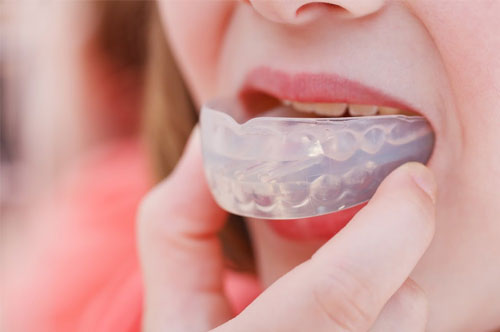
What Is Bruxism and Why Does It Matter?
Bruxism is the clinical term for grinding or clenching the teeth. According to the National Institute of Dental and Craniofacial Research, sleep bruxism affects an estimated 8 to 10 percent of adults and often goes undetected until a dentist identifies the characteristic wear patterns at a routine exam. Because it occurs during sleep, most patients have no awareness of the habit and no memory of it in the morning.
The forces generated during sleep bruxism are significantly greater than the forces used during normal chewing. Over time, this repeated loading wears down enamel, fractures teeth, chips restorations, and places excessive strain on the temporomandibular joints and surrounding muscles. Common symptoms include flattened or worn tooth surfaces, increased tooth sensitivity, morning jaw soreness or headaches, earaches without ear infection, and a tired or tight feeling in the jaw muscles. A bed partner may also notice the sound of grinding during the night.
Untreated bruxism leads to a predictable sequence of damage. Enamel does not regenerate, so every episode of grinding removes a layer that cannot be replaced. As enamel thins, teeth become more sensitive to temperature and more vulnerable to decay. Teeth may also begin to fracture, chip, or crack, requiring increasingly involved restorative treatment to repair. The jaw joints and surrounding muscles absorb significant strain from clenching, which can develop into chronic jaw pain, clicking or popping in the joint, and limited range of motion. Addressing bruxism with a night guard early prevents this cascade before it reaches a point that requires crowns, implants, or other major intervention.
Custom Night Guards at Alber Dental Studio
A night guard is a custom-fabricated oral appliance worn during sleep that creates a physical barrier between the upper and lower teeth. When grinding or clenching occurs, the forces are absorbed by the guard material rather than by the enamel and tooth structure. This does not stop the bruxism habit itself, but it dramatically reduces the damage caused by it and can also help relieve muscle tension in the jaw.
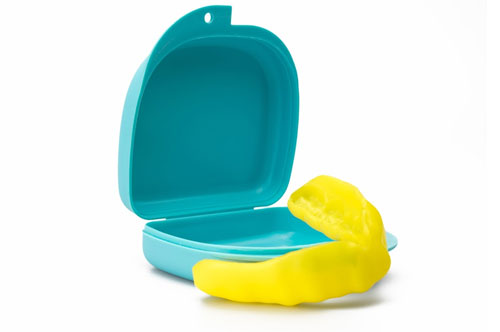
The critical word is custom. Store-bought boil-and-bite night guards are a poor substitute for a professionally made device. They are bulky, imprecise, and often poorly tolerated, which means patients stop wearing them quickly. A custom night guard fabricated from detailed impressions of your teeth fits snugly, stays in place throughout the night, and is far more comfortable for long-term nightly use. It is also calibrated to your specific bite, which matters for both effectiveness and joint comfort. Our advanced dental technology supports precise impressions and fabrication so your guard fits from the first night.
Night guards also play an important role in protecting existing dental work. Patients who have had crowns, veneers, implants, or bridges are particularly vulnerable to damage from bruxism because the restorations are not as resilient as natural enamel and can fracture or dislodge under the forces generated during grinding. A night guard significantly extends the lifespan of these restorations and protects the investment made in restorative or cosmetic treatment. If you have recently completed significant dental work, ask Dr. Alber whether a night guard is appropriate for your situation.
What to Expect When Getting a Night Guard
Getting a custom night guard at Alber Dental Studio is a straightforward two-appointment process. At the first visit, Dr. Alber evaluates your bite, assesses the wear patterns on your teeth, and takes detailed impressions or a digital scan of your upper and lower arches. These are sent to a dental lab where your guard is fabricated to precise specifications. At the second visit, Dr. Alber checks the fit, makes any necessary adjustments, and confirms that the guard is comfortable and properly aligned to your bite.
Most patients adapt to wearing a night guard within a few weeks. We provide detailed care instructions to maximize the lifespan of the device and monitor its condition at your regular exams. Night guards typically last several years with proper care, though patients who grind heavily may wear through them faster. We also treat bruxism in the broader context of your overall oral health, checking at each visit whether the guard is performing as intended and whether any new wear or damage has occurred.
- Have healthy teeth and gums with no untreated decay or gum disease
- Want to address stains, chips, gaps, or irregular tooth shape
- Maintain good daily oral hygiene habits
- Do not grind excessively, or are willing to wear a night guard
- Have sufficient enamel to support bonding
- Are looking for a long-term cosmetic investment
Dr. Alber will explain all your options clearly and recommend only what your situation actually calls for.
What to Expect at Your Visit
Health Review & Diagnosis
Dr. Alber reviews your health history, takes X-rays where indicated, and performs a thorough clinical exam. Any changes since your last visit are noted and factored into your care plan. New patients receive a comprehensive baseline evaluation before any treatment is discussed.
Clinical Assessment & Care Plan
Based on the clinical findings, Dr. Alber presents a clear assessment of what he sees and what it means. Every recommendation comes with a clinical rationale. Treatment options are explained in plain language so you can make an informed decision without pressure.
Custom vs. Store-Bought Night Guards
When treatment is indicated, it is performed with precision and care. When nothing active is needed, you leave with a clean baseline and a clear plan for your next visit. Either way, you know exactly where you stand.
Scheduling & Follow-Up
Before you leave, we schedule your next appointment based on your recommended interval — six months for most patients, more frequently if your periodontal status warrants it. Consistency is what preventive care is built on.

Protect Your Teeth While You Sleep
Schedule a consultation with Dr. Alber and get an honest assessment of your options. No pressure — just clear answers.
Questions About Your Care
Honest Answers at Every Visit
At Alber Dental Studio, every recommendation is explained clearly. If you have a question about what Dr. Alber found, why he is recommending something, or what happens if you wait, ask. We would rather spend time answering questions than have a patient leave uncertain.
| Custom Night Guard | Store-Bought Guard | |
|---|---|---|
| Fit | Fabricated from impressions of your specific bite | Generic mold — not shaped to your teeth |
| Durability | 3–5 years with proper care | Weeks to months — degrades quickly under grinding force |
| Comfort | Precisely fitted — worn consistently without discomfort | Bulky and ill-fitting — often abandoned within weeks |
| Protection | Clinical-grade material that absorbs and distributes force | Minimal — may not prevent enamel wear or joint strain |
| Cost over time | Higher upfront — significantly lower than repairing bruxism damage | Low upfront — ongoing replacement plus unremediated damage costs |
Your Next Step
Ready to Get Started?
Whether you are due for a routine visit or establishing care for the first time, scheduling is straightforward. New patients are welcome. Call or request an appointment online and our team will get you set up.
We see patients of all ages across the full health spectrum. If you are new to Alber Dental Studio, your first visit establishes a complete baseline so we have something meaningful to compare against at every future appointment.
Dr. Alber and the team take the time to understand your goals, your health history, and your concerns before making any recommendations. The care you receive reflects your specific situation — not a template.
We accept HSA and FSA funds and offer 0% financing through CareCredit, Cherry, and Altheon. For patients without insurance, our in-house membership plan covers routine visits at a predictable annual cost.
Routine visits are covered in whole or in part by most dental insurance plans. We are a fee-for-service practice and provide documentation for out-of-network reimbursement. Visit our financing page for full details.

Night Guards With Flexible Payment Options
Night guards are often covered in part by dental insurance, particularly when bruxism is documented and associated with tooth damage. Our team will review your benefits before treatment begins. For any out-of-pocket costs, we offer 0% financing through CareCredit, Cherry, and Altheon, and we accept HSA and FSA funds. Visit our financing page to learn more.
Also at Alber Dental Studio
Also at Alber Dental Studio
Dr. Alber offers a full range of dental services cosmetic dentistry offering at Alber Dental Studio.
Comprehensive care plans designed around your oral health goals and individual risk profile.
Same-visit solutions for common dental concerns — no lengthy process required.
Evidence-based preventive care that keeps problems from developing in the first place.
Read What Our Customers Are Saying
Common Questions
Frequently Asked Questions
How do I know if I grind my teeth?
How long does it take to get a night guard?
Why not just use an over-the-counter night guard?
Does insurance cover a night guard?
How long does a night guard last?
Will a night guard cure my grinding habit?
Alber Dental Studio: Night Guards in Boulder, CO
Dr. Marc Alber and our team have helped Boulder patients protect their teeth from bruxism damage for over 26 years. We take a thorough, proactive approach to identifying grinding and clenching before significant damage accumulates, and we provide night guards that patients actually wear because they fit properly and are comfortable from the start. Learn more about Dr. Alber’s background by visiting his provider profile. If you wake up with jaw soreness, have been told you grind at night, or have noticed your teeth becoming more worn or sensitive, contact our Boulder office to schedule an evaluation. Protecting your teeth now is far simpler than repairing the damage later.