
27+
Years Serving Boulder
735+
Five-Star Google Reviews
3
Financing Options Accepted
100%
Fee-for-Service Practice
Not every tooth that develops deep decay or trauma requires a root canal. When the pulp is exposed or nearly exposed but has not yet become infected, pulp capping offers a conservative alternative that may preserve pulp vitality and avoid the need for more invasive endodontic treatment, as supported by AAE guidelines on pulp capping. It is one of the most important tools in conservative dentistry, and when it is the right choice, it can spare a tooth and its owner a significantly more involved procedure.
At Alber Dental Studio, pulp capping is part of our broader commitment to conservative, tooth-preserving care. Dr. Marc Alber evaluates every case carefully to determine whether the pulp has a realistic chance of healing and responding to capping, or whether root canal treatment is the more appropriate path. His 26+ years of clinical experience ensures this judgment is grounded in careful diagnosis rather than a default toward either approach. Pulp capping is a core component of our endodontic and restorative dentistry services.

What Is Pulp Capping?
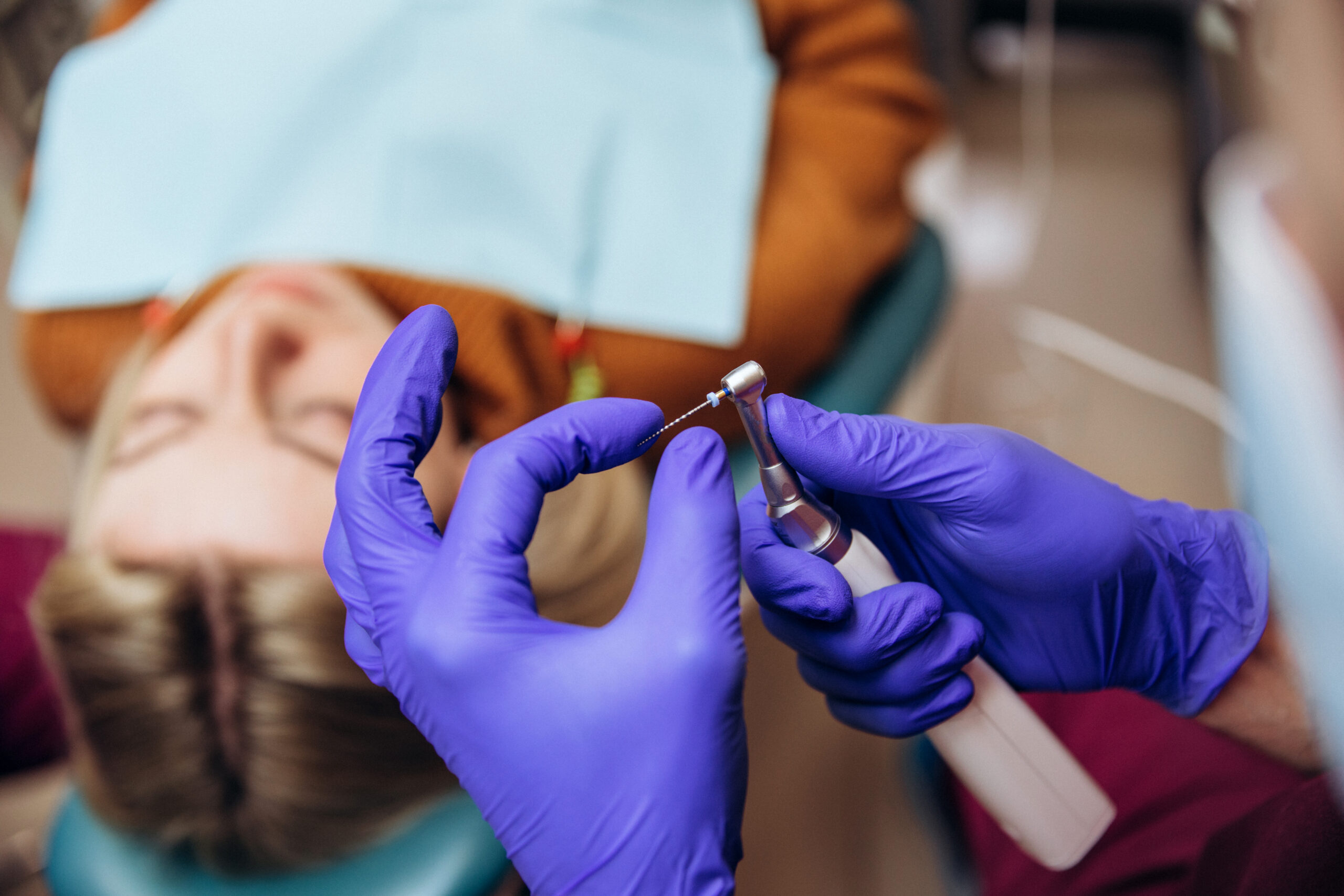
Pulp capping is a procedure in which a protective material is placed over an exposed or nearly exposed dental pulp to encourage healing and prevent infection. The goal is to preserve pulp vitality — keeping the living tissue inside the tooth alive and functional — so the tooth does not require root canal treatment. There are two types. Direct pulp capping is used when the pulp has been minimally exposed, typically during the removal of decay or following a small trauma. A biocompatible capping material is placed directly over the exposure to stimulate the pulp to form a protective dentin bridge. Indirect pulp capping is used when a very thin layer of dentin separates the pulp from the decay, but actual exposure has not occurred. A liner is placed over this remaining tissue to protect it while decay removal is completed, encouraging the tooth to continue mineralizing the area.
Pulp capping is appropriate only in specific clinical circumstances. The pulp must be healthy or minimally inflamed, the exposure must be small and free of bacterial contamination, and the patient must be able to maintain adequate oral hygiene. If these conditions are not met, root canal treatment is the more reliable path. Dr. Alber evaluates each case individually and will be direct about whether pulp capping is a reasonable option or whether root canal treatment is the more appropriate recommendation.
The importance of a pulp capping procedure is often underappreciated by patients, but preserving a living pulp has real benefits. A vital pulp continues to produce dentin, maintains the tooth’s ability to sense temperature and pressure, and contributes to the long-term health of the surrounding tissues. A tooth that retains its pulp is stronger and more resilient than one that has been treated endodontically. When pulp capping succeeds, the patient avoids a root canal and all of its associated complexity, cost, and recovery time.
The Pulp Capping Procedure and Aftercare
A pulp capping procedure is typically performed in the same appointment as the decay removal that reveals the pulp proximity or exposure. After removing decay and cleaning the area, Dr. Alber places the capping material directly over the exposed or nearly exposed pulp and seals it with a biocompatible liner. The tooth is then restored, typically with a filling or crown depending on how much structure was removed and how much decay was present. The entire procedure is completed under local anesthesia and is generally no more involved than a standard restorative appointment.
After a pulp cap, follow-up evaluation is important. Dr. Alber will assess the tooth at subsequent visits to confirm the pulp is remaining vital and responding appropriately. Signs of success include resolution of any pre-existing sensitivity, no development of pain, and radiographic evidence of dentin bridge formation over time. If the tooth develops symptoms of pulp infection or the pulp fails to heal, root canal treatment becomes necessary. We monitor capped teeth proactively and will communicate clearly about what we find at each follow-up visit. Our advanced diagnostic technology supports accurate monitoring throughout.
The best way to avoid needing pulp capping or root canal treatment is to catch and treat decay before it reaches the pulp. This is why routine exams and X-rays are so important. Dr. Alber evaluates every tooth at every visit for signs of advancing decay, and intervening with a simple filling while the decay is still superficial consistently avoids more complex treatment later. Patients who stay current with preventive care rarely face pulp involvement unless trauma or a very sudden fracture is involved. Visit our preventive dentistry page to learn more about how we approach long-term dental health.

Monitoring After Pulp Capping
After a pulp cap is placed, Dr. Alber monitors the tooth at follow-up appointments to confirm the pulp is healing. We look for resolution of sensitivity, absence of pain, and radiographic evidence of dentin bridge formation over time. If the pulp shows signs of failure such as developing infection, spontaneous pain, or swelling, root canal treatment becomes necessary. Most patients whose pulp caps are clinically successful go on to retain a vital, functional tooth for years. We communicate clearly about what we observe at every follow-up so you are never in the dark about how the tooth is responding. Our financing options through CareCredit, Cherry, and Altheon are available if further treatment becomes necessary.
- Have healthy teeth and gums with no untreated decay or gum disease
- Want to address stains, chips, gaps, or irregular tooth shape
- Maintain good daily oral hygiene habits
- Do not grind excessively, or are willing to wear a night guard
- Have sufficient enamel to support bonding
- Are looking for a long-term cosmetic investment
What to Expect at Your Visit
Decay Removal & Pulp Assessment
Dr. Alber reviews your health history, takes X-rays where indicated, and performs a thorough clinical exam. Any changes since your last visit are noted and factored into your care plan. New patients receive a comprehensive baseline evaluation before any treatment is discussed.
Capping Material Placement & Seal
Based on the clinical findings, Dr. Alber presents a clear assessment of what he sees and what it means. Every recommendation comes with a clinical rationale. Treatment options are explained in plain language so you can make an informed decision without pressure.
Direct vs. Indirect Pulp Capping
When treatment is indicated, it is performed with precision and care. When nothing active is needed, you leave with a clean baseline and a clear plan for your next visit. Either way, you know exactly where you stand.
Crown or Restoration & Monitoring
Before you leave, we schedule your next appointment based on your recommended interval — six months for most patients, more frequently if your periodontal status warrants it. Consistency is what preventive care is built on.
Save Your Tooth, Skip the Root Canal
Schedule a cosmetic consultation with Dr. Alber and find out whether porcelain pulp capping is the right path for your smile goals. No pressure — just an honest assessment.
Questions About Your Care
Honest Answers at Every Visit
At Alber Dental Studio, every recommendation is explained clearly. If you have a question about what Dr. Alber found, why he is recommending something, or what happens if you wait, ask. We would rather spend time answering questions than have a patient leave uncertain.
| Direct Pulp Capping | Indirect Pulp Capping | |
|---|---|---|
| Indication | Pulp is exposed — directly visible after decay removal | Pulp is not exposed — thin dentin layer remains over pulp |
| Pulp exposure | Yes — capping material placed directly on exposed pulp tissue | No — protective material placed over remaining dentin |
| Material | MTA or biocompatible calcium silicate cement | Calcium hydroxide or glass ionomer liner |
| Goal | Stimulate dentin bridge formation and preserve pulp vitality | Allow remaining dentin to remineralize and protect the pulp |
| Best for | Acute mechanical or traumatic exposures in vital, symptom-free teeth | Near-exposure cases where pulp health is confirmed |
Your Next Step
Ready to Get Started?
Whether you are due for a routine visit or establishing care for the first time, scheduling is straightforward. New patients are welcome. Call or request an appointment online and our team will get you set up.
We see patients of all ages across the full health spectrum. If you are new to Alber Dental Studio, your first visit establishes a complete baseline so we have something meaningful to compare against at every future appointment.
Dr. Alber and the team take the time to understand your goals, your health history, and your concerns before making any recommendations. The care you receive reflects your specific situation — not a template.
We accept HSA and FSA funds and offer 0% financing through CareCredit, Cherry, and Altheon. For patients without insurance, our in-house membership plan covers routine visits at a predictable annual cost.
Routine visits are covered in whole or in part by most dental insurance plans. We are a fee-for-service practice and provide documentation for out-of-network reimbursement. Visit our financing page for full details.

Pulp Capping With Flexible Payment Options
Pulp capping is typically covered in part by dental insurance. Our team will confirm your benefits before treatment. For any remaining costs, we offer 0% financing through CareCredit, Cherry, and Altheon and accept HSA and FSA funds. Visit our financing page for details.
Also at Alber Dental Studio
Also at Alber Dental Studio
Dr. Alber offers a full range of dental services cosmetic dentistry offering at Alber Dental Studio.
Comprehensive care plans designed around your oral health goals and individual risk profile.
Same-visit solutions for common dental concerns — no lengthy process required.
Evidence-based preventive care that keeps problems from developing in the first place.
Read What Our Customers Are Saying
Common Questions
Frequently Asked Questions
What is pulp capping and how does it work?
What is the difference between direct and indirect pulp capping?
Is pulp capping always appropriate?
How will I know if the pulp cap is successful?
What happens if the pulp cap doesn't work?
Is pulp capping covered by dental insurance?
Alber Dental Studio: Pulp Capping in Boulder, CO
Dr. Marc Alber and the team at Alber Dental Studio approach every restorative decision conservatively, choosing the least invasive treatment that will reliably achieve the desired outcome. When pulp capping is clinically appropriate, we use it. When it is not, we tell you that directly and explain why. Over 26 years of practice and 735+ five-star reviews reflect a consistent commitment to honest, patient-centered care. Learn more about Dr. Alber on his provider profile. If you have been told you may need a root canal or have a tooth with deep decay, contact our Boulder office for an evaluation. A pulp cap may be the right solution.