

27+
Years Serving Boulder
735+
Five-Star Google Reviews
3
Financing Options Accepted
100%
Fee-for-Service Practice
Tooth extraction is one of the most common dental procedures, and one of the most misunderstood. The goal of dentistry is always to save teeth when they can be saved, but there are circumstances where extraction is the most appropriate and most protective course of action, as the NIDCR notes on tooth loss confirms — for the tooth in question, for the surrounding teeth, or for the patient’s overall oral health. Knowing when extraction is the right call, and performing it with care and precision, is part of comprehensive dental practice.
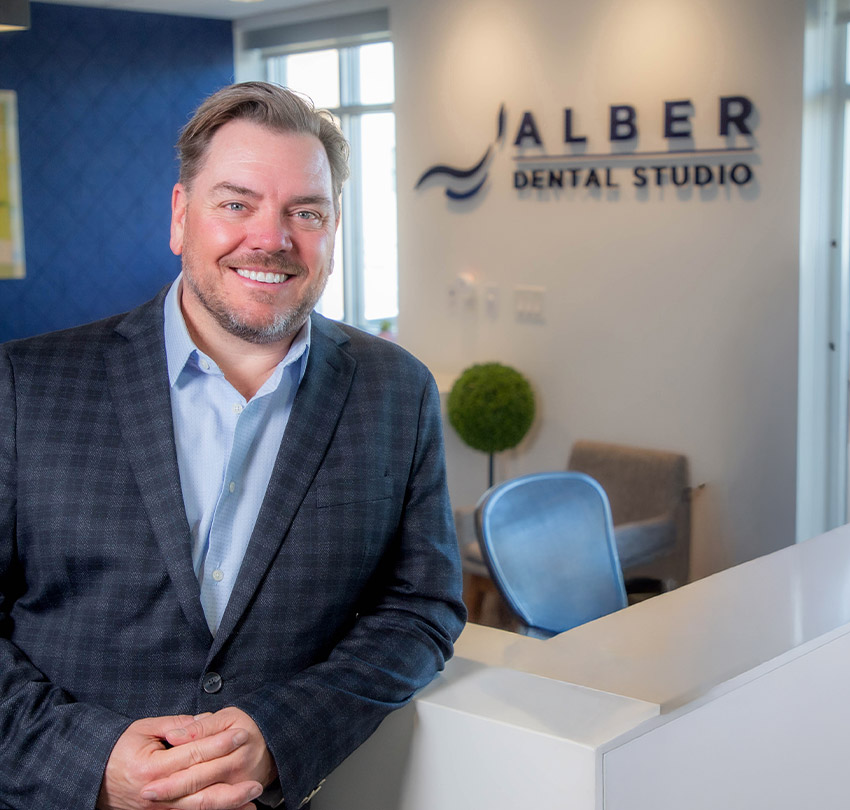
At Alber Dental Studio, tooth extractions are performed with the same thoroughness and attention to patient comfort that defines everything we do. Dr. Marc Alber’s 26+ years of clinical experience means he evaluates extraction cases carefully before recommending the procedure, and when extraction is recommended, he explains the reasoning clearly. Most extractions are more straightforward than patients expect. Extraction is a core component of our general dentistry and oral surgery services. For patients who are anxious about the procedure, we offer sedation options to ensure a comfortable experience.

When Is Tooth Extraction Necessary?
The most common reasons a tooth requires extraction include severe decay that has destroyed too much structure to support a reliable restoration, advanced periodontal disease that has caused significant bone loss around the root, a vertical root fracture that cannot be treated endodontically, and irreparable damage from trauma. Impacted wisdom teeth are another common indication — when a third molar cannot fully erupt due to lack of space, it may cause pain, infection, damage to adjacent teeth, or cyst formation. Extraction is also sometimes indicated for orthodontic purposes, when removing a tooth creates the space needed for proper alignment of the remaining teeth.
In each of these situations, Dr. Alber evaluates the tooth and its surrounding structures thoroughly before recommending extraction. When a tooth can be saved with a predictably good long-term outcome, we pursue that path. When it cannot, we explain the clinical reasoning clearly and discuss what comes next — because extraction is rarely the end of the treatment conversation. For most patients, dental implants are the preferred long-term replacement for extracted teeth, particularly when the adjacent bone is adequate to support implant placement.
Simple extractions involve teeth that are fully erupted and accessible. The tooth is loosened with an elevator instrument and removed with forceps under local anesthesia. Surgical extractions are performed when a tooth is impacted, has broken off at the gumline, has curved or fused roots, or is otherwise positioned in a way that makes simple removal impossible. These cases require a small incision in the gum tissue and may involve sectioning the tooth to facilitate removal. Both types are performed at our office, and sedation is available for patients who prefer additional comfort.
Comfortable Extractions With Clear Next Steps
Schedule a consultation with Dr. Alber if you have a tooth causing pain, infection, or structural concerns — and get a clear, honest assessment of whether extraction is necessary.
Recovery and Planning for Tooth Replacement
Recovery from a simple extraction is typically straightforward. We provide post-operative instructions covering blood clot protection, dietary guidelines, activity restrictions, and pain management. Most patients are comfortable within a few days. Surgical extractions, particularly impacted wisdom teeth, may involve more swelling and a slightly longer recovery. We are available to answer questions during the healing period and will schedule a follow-up when needed.
One critical consideration at the time of extraction is bone preservation. When a tooth is removed, the bone that surrounded its root begins to resorb — a process that can significantly reduce the volume and density of bone available for a future implant. A socket preservation procedure, also called a ridge preservation bone graft, placed at the time of extraction minimizes this resorption and keeps the site in optimal condition for implant placement. We discuss socket preservation routinely when an implant is part of the plan, because the timing matters — preserving the socket immediately after extraction is far more efficient than attempting to rebuild lost bone later. Visit our bone grafting page for more detail on that procedure.
Leaving the space from an extracted tooth empty long-term carries real consequences. Adjacent teeth shift toward the gap, opposing teeth supra-erupt into it, and the bone in the area continues to resorb. These changes can complicate future implant placement and compromise the bite. We discuss replacement options — implant, bridge, or other — at or before the extraction appointment so patients can make informed decisions about next steps and timing. Learn more about replacement options on our restorative dentistry page.

What to Expect at Your Appointment
Your extraction appointment at Alber Dental Studio begins with a review of your X-rays and a clear explanation of what the procedure involves and what to expect during recovery. The area is thoroughly anesthetized before anything begins — you should feel pressure but not pain. If sedation is part of your plan, we confirm arrangements before the procedure. Post-operatively, we provide written aftercare instructions and are available if questions arise during healing. If an implant or bone graft is part of the next step, we discuss timing and sequence before you leave. Contact our Boulder office if you have a tooth that needs evaluation, or if you are managing pain and need to be seen promptly.
- Have healthy teeth and gums with no untreated decay or gum disease
- Want to address stains, chips, gaps, or irregular tooth shape
- Maintain good daily oral hygiene habits
- Do not grind excessively, or are willing to wear a night guard
- Have sufficient enamel to support bonding
- Are looking for a long-term cosmetic investment
Dr. Alber will confirm whether extraction is the appropriate approach during your consultation — and clearly explain your tooth replacement options and next steps before proceeding.
The Tooth Extraction Process
Examination & X-Ray
Dr. Alber begins with a thorough exam to confirm you are a good candidate — healthy gums, adequate enamel, and no untreated decay. From there, we discuss your smile goals and review shade options. Digital photos help visualize the proposed changes before any treatment begins. For patients unsure about shade or shape, we can discuss temporary mock-ups to preview the result.
Anesthesia & Extraction
Local anesthesia is administered to fully numb the area. For simple extractions, the tooth is loosened using an elevator instrument and removed with forceps. For surgical extractions, an incision is made to access impacted or broken teeth.
Simple vs. Surgical Extraction
Once the tooth is removed, the socket is cleaned and gauze is placed to control bleeding. A bone graft may be placed at this stage if implant placement is planned. You are given written aftercare instructions before leaving.
Post-Extraction Care & Healing
Healing typically takes 1–2 weeks for simple extractions. We schedule a follow-up to confirm healing and discuss tooth replacement options — including implants, bridges, or dentures — when appropriate.

Ready to Schedule? We Are Accepting New Patients.
Call our Boulder office or request an appointment online. Same-day appointments available for dental emergencies.
Simple Extraction vs. Surgical Extraction
Simple Extraction vs. Surgical Extraction
Both are cosmetic options — the right choice depends on the extent of the change you want and how long you want results to last.
| Simple Extraction | Surgical Extraction | |
|---|---|---|
| Tooth visibility | Fully erupted tooth visible above the gum line | Partially erupted, impacted, or broken below the gum line |
| Technique | Tooth loosened with an elevator and removed with forceps | Incision made in the gum; bone or tooth may be sectioned |
| Anesthesia | Local anesthetic only in most cases | Local anesthetic; sedation available for complex cases |
| Recovery | Typically 1–3 days of mild soreness | 3–7 days; swelling and soreness more pronounced |
| Best for | Decayed, infected, or crowded teeth with adequate root structure | Wisdom teeth, impacted teeth, or teeth broken at the gum line |
Caring for Your Extraction Site
How to Care for Your Socket After Extraction
The clot that forms in the socket is essential to healing. Protecting it in the first 24–48 hours is critical. Follow these guidelines to avoid dry socket and support normal recovery:
Do not use a straw, spit forcefully, smoke, or rinse vigorously for at least 24 hours. These actions create suction or pressure that can dislodge the clot and cause dry socket — the most common post-extraction complication.
Smoking significantly increases the risk of dry socket and delayed healing by reducing blood supply to the extraction site. If you smoke, avoiding it for at least 72 hours after extraction is strongly recommended.
Eat soft foods and avoid chewing on the extraction side while healing. Cold foods such as yogurt or applesauce are comfortable in the first 24 hours. Avoid hot liquids and hard or crunchy foods until the site is fully healed.
Attend your follow-up appointment so Dr. Alber can confirm healing and discuss tooth replacement. Leaving a gap untreated leads to bone loss and shifting of adjacent teeth over time.

Tooth Extractions With Flexible Payment Options
Extractions are covered in part by most dental insurance plans. Our team will verify your benefits before the procedure. For any remaining costs, we offer 0% financing through CareCredit, Cherry, and Altheon, and we accept HSA and FSA funds. Visit our financing page for details.
Also at Alber Dental Studio
Explore Our Other Cosmetic Services
Tooth extraction is often the first step in a broader restorative pathway. These services are commonly part of the same treatment plan at Alber Dental Studio.
A bone graft placed at the time of extraction preserves ridge volume and keeps the site implant-ready during the healing period.
A same-appointment option for minor chips or gaps — no enamel removal needed.
Professional-strength whitening when tooth color is the primary concern.
Read What Our Customers Are Saying
Common Questions
Frequently Asked Questions
When does a tooth need to be extracted?
What is the difference between a simple and surgical extraction?
Does tooth extraction hurt?
Should I get a bone graft at the same time as my extraction?
What happens if I don't replace an extracted tooth?
Is tooth extraction covered by insurance?
Alber Dental Studio: Tooth Extractions in Boulder, CO
Dr. Marc Alber and the team at Alber Dental Studio approach every extraction with the goal of making the procedure as straightforward and comfortable as possible, and leaving you with a clear plan for what comes next. We do not recommend extraction lightly — and when it is the right call, we handle it with the same precision and care that has earned us 735+ five-star reviews over 26+ years. Learn more about Dr. Alber on his provider profile. Contact our Boulder office to schedule an evaluation or to be seen for a tooth that needs prompt attention.